
Shelf life is rarely an accident. It is engineered, layer by layer, into the food packaging structure that surrounds the product, and the choice of food film packaging does more to determine freshness than almost any other variable outside the recipe itself. RTG Films understands how barrier performance, sealing behavior and structure interact makes the difference between a snack that stays crisp for nine months and one that goes stale in six weeks.
This guide breaks down the physics behind film selection, the barrier numbers that actually appear on technical data sheets, and how different food categories demand very different material stacks.
What Actually Shortens Shelf Life
Food degrades through a handful of predictable mechanisms, and each one maps to a specific film property. Once a brand identifies which mechanism dominates for its product, the specification process becomes far more straightforward.
- Moisture migration: Dry products absorb water vapor and lose crispness, while high-moisture products dry out and lose weight.
- Oxidation: Oxygen reacts with fats, pigments and vitamins, producing rancid flavors and color fade in as little as two to four weeks without a barrier.
- Light exposure: Ultraviolet and visible light accelerate lipid oxidation, particularly in dairy fats and oils.
- Aroma loss or pickup: Volatile flavor compounds escape through poorly matched polymers, and packaging can absorb off-notes from neighboring products.
- Microbial growth: Seal failures and pinholes admit contamination that no barrier layer can undo.
The Two Numbers That Define a Barrier Film
Technical data sheets for lidding film revolve around two measurements. Learning to read them removes most of the guesswork from material selection.
Water Vapor Transmission Rate (WVTR) describes how much moisture passes through a film, usually reported in grams per square meter per 24 hours at 38 degrees Celsius and 90 percent relative humidity. Oxygen Transmission Rate (OTR) describes oxygen passage, reported in cubic centimeters per square meter per 24 hours in one atmosphere. Both scale with thickness, so a 30 micron film generally performs better than the same polymer at 15 micron.
Typical values give a useful frame of reference:
- Plain BOPP, 20 micron: WVTR around 5 to 7, OTR around 1,500 to 2,000. Good moisture barrier, weak oxygen barrier.
- PET, 12 micron: WVTR around 40 to 50, OTR around 100 to 120. Strong mechanically, moderate on both barriers.
- Metallized BOPP or PET: WVTR often below 0.5, OTR frequently below 2. A large improvement for a thin aluminum deposit.
- EVOH-containing structures: OTR below 1 in dry conditions, though performance degrades as humidity rises unless the layer is buried between moisture-resistant polymers.
- Aluminum foil laminates: Effectively zero transmission for both gases, which is why they still dominate infant formula and long-life coffee.
Matching Films to Food Categories
The right specification depends entirely on what fails first inside the pack. A structure that is perfect for roasted coffee will actively harm a bag of fresh salad greens.
Dry Snacks, Crackers and Cereals
Moisture is the primary enemy, and texture loss becomes noticeable once product moisture rises by only one or two percent. Metallized BOPP laminated to a sealant layer typically delivers six to twelve months of shelf life on chips and extruded snacks. Light barrier from the metallization also protects frying oils from oxidation.
Coffee and Roasted Nuts
Oxygen drives rancidity here, and target OTR values usually sit below 1 to 2 for a twelve month claim. High-barrier laminates combined with a one-way degassing valve allow carbon dioxide from fresh roast to escape without admitting oxygen. Nitrogen flushing at the filling stage pushes residual oxygen below two percent headspace.
Cheese, Meat and Ready Meals
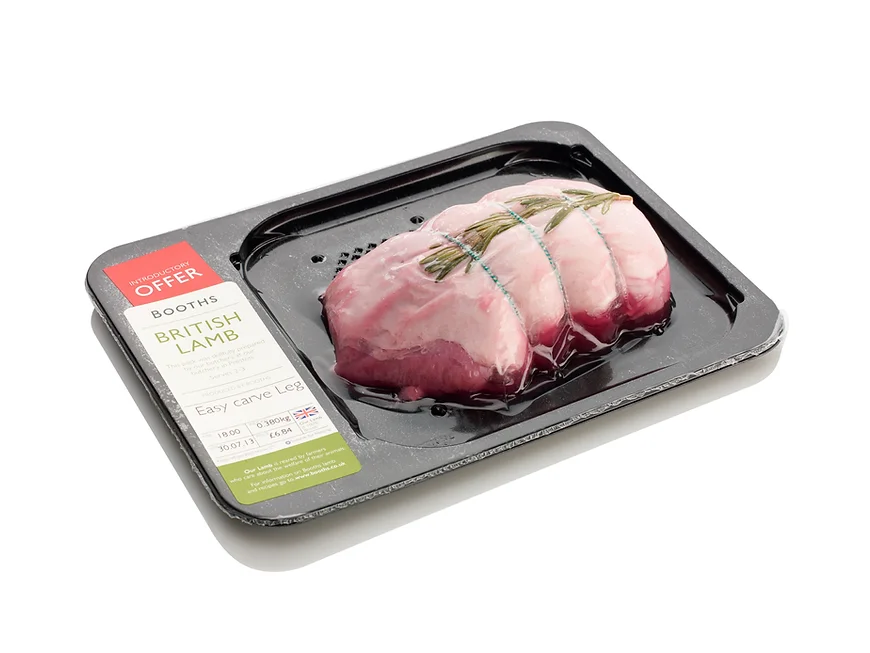
These products need oxygen barrier plus formability and reliable seals through fat and moisture contamination. EVOH or PVDC-coated structures paired with a peelable or weld-strength sealant handle vacuum and modified atmosphere formats. Shelf life extensions of two to four times over plain PE are common.
Fresh Produce
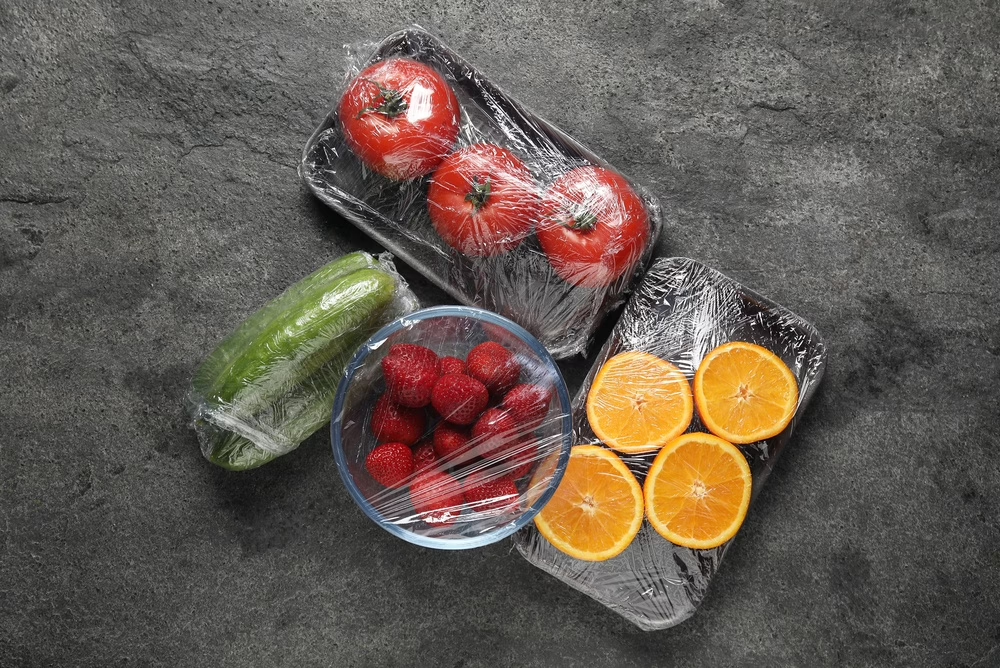
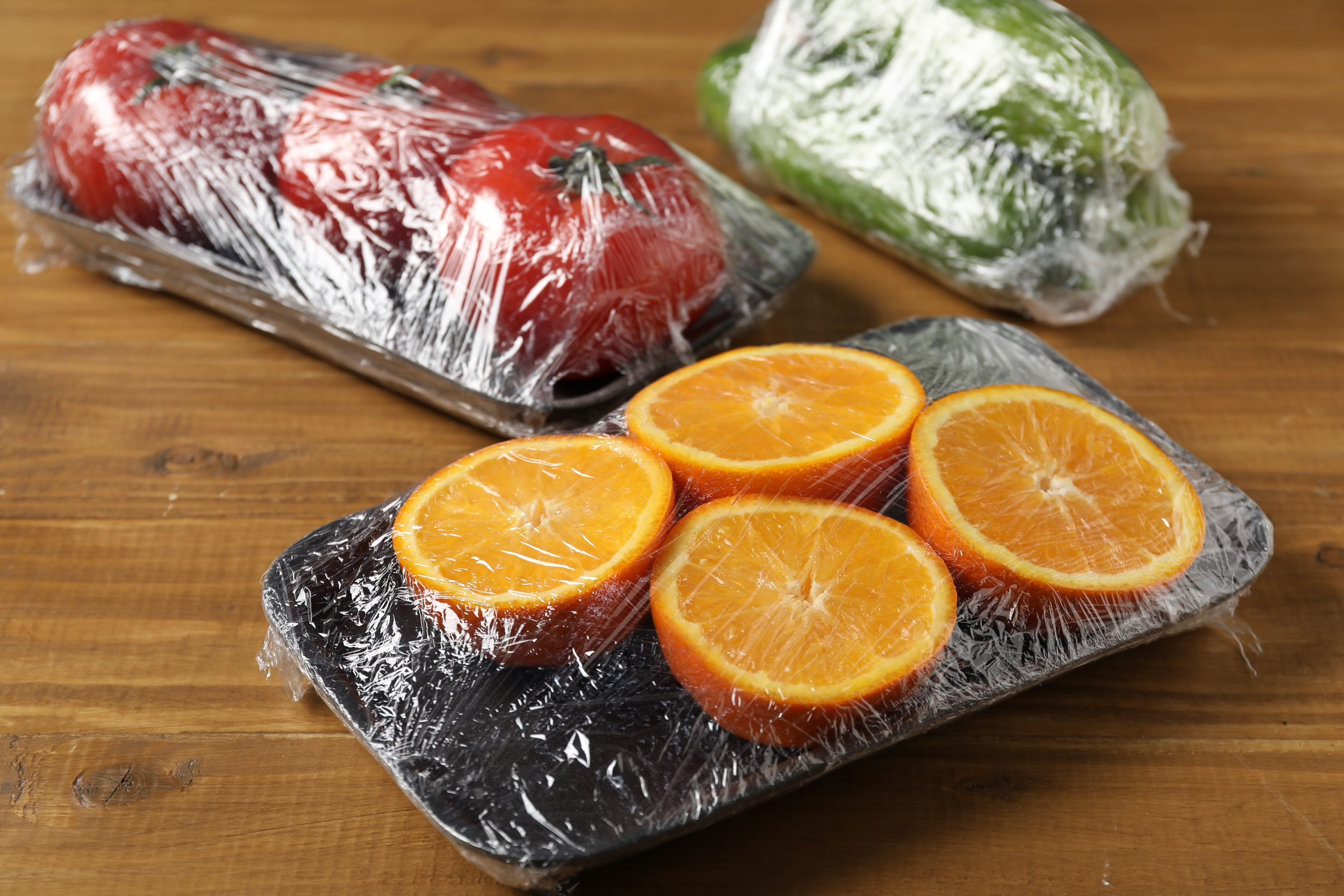
Respiring produce needs the opposite approach, since a total barrier suffocates the product and creates anaerobic spoilage. Micro-perforated or high-permeability polyolefin films maintain an equilibrium atmosphere of roughly 2 to 5 percent oxygen and 5 to 10 percent carbon dioxide. Getting that balance right can add five to ten days to a salad or berry pack.
Why Multilayer Structures Exist
No single polymer delivers strength, clarity, barrier, printability and sealability at once. Laminated and coextruded films combine layers so each material contributes one property, which is why a typical snack bag might read as reverse-printed BOPP, adhesive, metallized BOPP, and a sealant layer.
The sealant deserves particular attention because most shelf life failures in the field trace back to seals rather than barriers. Contaminated seal areas, insufficient dwell time and mismatched sealing temperatures create channel leaks that are invisible to the eye. Films with a broad hot-tack window and seal initiation temperatures in the 90 to 110 degree Celsius range tend to be more forgiving on high-speed lines.
Regulatory and Sustainability Constraints
Any material in direct contact with food must meet food contact regulations, which RTG Films follows meticulously. Suppliers should be able to produce declarations of compliance, migration data and full traceability on request.
Recyclability pressure has reshaped structure design over the past several years. Mono-material polyethylene and polypropylene laminates now replace many mixed-polymer structures, using coatings and machine-direction oriented layers to recover barrier performance that would otherwise be lost. The trade-off is usually a modest reduction in barrier or a slightly thicker overall gauge.
A Practical Specification Sequence
- Define the shelf life target in months, including expected storage temperature and humidity.
- Identify the failure mechanism through accelerated shelf life testing rather than assumption.
- Calculate the required WVTR or OTR using pack surface area, headspace volume and the product tolerance limit.
- Select the barrier layer that meets the number with a safety margin of at least 30 percent.
- Confirm machinability by running trials on the actual filling equipment, not a laboratory sealer.
- Validate with real-time storage studies alongside accelerated data, since accelerated testing can overstate performance for oxidation-sensitive products.
Skipping the calculation step is the most frequent cause of overspecification. Many brands pay for foil-level barriers when a metallized structure at a fraction of the cost would comfortably hold the claim.
Frequently Asked Questions
How much shelf life can a high-barrier film add?
Upgrading from plain polypropylene to a metallized or EVOH-based structure commonly extends shelf life by two to four times, taking a three month product to nine or twelve months. The exact gain depends on which degradation mechanism dominates and on filling conditions such as nitrogen flushing.
Good OTR value for coffee packaging
Most roasters target an oxygen transmission rate below 1 to 2 cc per square meter per 24 hours for a twelve month shelf life. Values in that range, combined with a degassing valve and low residual headspace oxygen, protect aromatic compounds that begin degrading within days of roasting.
Does thicker film always mean better protection?
Barrier improves roughly in proportion to thickness within the same polymer, so doubling gauge can approximately halve transmission rates. Adding a functional barrier layer, however, usually delivers a far larger improvement per micron than simply increasing the thickness of a base film.
Can recyclable mono-material films match traditional laminates?
Mono-material polyethylene and polypropylene structures now reach OTR values in the 1 to 10 range using barrier coatings, which covers a large share of dry and ambient applications. Products requiring near-zero oxygen ingress over eighteen months or longer still generally rely on metallized or foil-based constructions.
Testing Shelf Life Before Launch?
Accelerated studies at 38 degrees Celsius and 90 percent relative humidity typically compress six to twelve months of storage into four to twelve weeks. Most quality teams run real-time studies in parallel, because accelerated conditions can distort results for fat oxidation and enzymatic changes.
Specifying Your Next Food Packaging Film
RTG Films supplies barrier, sealant and printable film structures with custom slit widths and roll sizes matched to existing packaging equipment. Contact RTG Films by sending over your shelf life target, product details and machine specifications, and our team will recommend a structure with the barrier numbers to back it.